
Oi, America...You good?
Watching the collapse of truth, trust and empire from the edge of the world

When the Neighbour’s House Is on Fire and You Share a Fence
Lately, my brain’s been serving up questions like some kind of existential tasting menu. Too complex for a tweet, too spicy for small talk, and definitely not something you can solve between mouthfuls of reheated pasta. They’re the kind of thoughts that sneak in mid-toothbrush and refuse to leave, buzzing under the surface like a dodgy caffeine hit. Not urgent exactly. But insistent. Like the universe clearing its throat.
As an Australian, I keep finding myself side-eyeing the United States like a neighbour. Our economy, security, and foreign policy are all so tightly glued to theirs that when things start wobbling over there, we don’t just get the tremors. We get the full-body whiplash and a strongly worded memo about staying calm.
I watch with a mix of fascination and dread as American institutions spring leaks, executive power bulks up like it’s on steroids, and social cohesion frays like a $5 Kmart hoodie in the dryer. It’s not just political theatre anymore. It’s a slow-motion systems failure with global side effects. I can’t help but wonder…are we just standing here holding the sparkler while the house goes up? Are we too quick to follow? Too slow to question? Or just too used to calling dysfunction “allies” and hoping for the best?
This isn’t just a passing thought, it’s the mental equivalent of that one smoke alarm with a dying battery that won’t shut up. Something deeper is off. This is bigger than left vs right. It’s not the cliché of good vs evil. It’s more like the whole operating system needs a factory reset. Because what’s breaking isn’t just politics? It’s the wiring behind the walls. And we’re all sitting here sniffing the air like, “Is that burning… democracy?”
I keep asking: how did America, once sold to the world as the poster child for democracy and diplomacy, turn into a reality show where everyone's yelling and no one’s reading the rules? What happened to the restraint? The mutual respect? The idea that leadership wasn’t just a shouty performance but a responsibility?
I keep coming back to this: how did the country that once prided itself on diplomacy and gravitas end up with presidents subtweeting each other like exes on a bender? There used to be a baseline of decorum. You didn’t have to like your opponent, but you didn’t try to humiliate them on live TV either. Debate was fierce, but it wasn’t a WWE cage match. Now? It’s all bark, no nuance, and somehow the nuclear codes are still in reach.
When Checks and Balances Start Bouncing
Since stepping back into office in 2025, Trump’s been signing executive orders like he’s collecting them for sport. Diversity programs have been gutted. Agency independence? Gone. Every federal department now answers directly to the White House, like a bunch of interns too scared to speak without permission. One order even made it mandatory for all legal strategy to run through the Oval Office. It doesn’t feel like strategy. It feels like someone trying to hold every lever at once, just to make sure no one else gets near the controls.
Then came the attempt to centralise voter registration, which landed like a brick in a legal hornet’s nest. States pushed back hard, filing lawsuits and calling it a federal overreach. But the real concern wasn’t the paperwork. It was the pattern. This wasn’t about efficiency. It was about control. A slow tightening of the grip, one signature at a time.
Concerns about the integrity of voting systems have only intensified. Despite multiple independent audits and court rulings finding no evidence of widespread fraud in the 2020 or 2024 elections, Trump and his allies continue to claim the systems are rigged. This ongoing rhetoric undermines public trust in democratic processes.
Voting machines in the U.S. vary by state, with some jurisdictions still relying on electronic voting without a verifiable paper trail. This differs from systems in countries like Australia, where paper ballots are mandatory and counted by hand, adding a layer of transparency and public confidence. In the U.S., manufacturers like Dominion Voting Systems and ES&S have faced public scrutiny and lawsuits, despite no credible evidence proving machine manipulation. The 2021 Arizona audit and subsequent 2024 election reviews reaffirmed the security of the vote, but misinformation continues to spread.
A lawsuit filed in 2024 by election watchdog groups sought to increase transparency in voting machine software and certification processes. Though dismissed by federal courts for lack of standing, the case sparked renewed debate over the need for open-source voting systems and uniform federal standards. Critics argue that without broader reform, faith in the electoral process will continue to erode.
America keeps insisting its elections are secure, and technically, they are. Multiple audits, court decisions, and bipartisan reviews have said so. But here’s the thing, the truth doesn’t always win the popularity contest. What matters now is perception. If enough people stop trusting the process, the outcome becomes irrelevant. Not because it’s rigged, but because it no longer feels real. And that doubt, once it creeps in, spreads faster than any fact-check ever could.
However… in saying that, there are legitimate concerns. In June 2025, Rockland County, New York, landed in the spotlight after a group called SMART Legislation filed a lawsuit demanding a recount. The issue? A weird set of anomalies in the 2024 presidential and Senate results. Voters in districts like Ramapo swore they voted for Kamala Harris and Kirsten Gillibrand, but the official tally showed Harris with zero votes. Zero. In a Democratic stronghold.
Others claimed their votes for independent Senate candidate Diane Sare disappeared completely. The case wasn’t dismissed. It’s heading to discovery, with a court date set for September. It might not flip the election, but it raises a bigger question: when even small inconsistencies trigger legal action, maybe people aren’t asking for perfection. Maybe they just want a system that looks like it’s paying attention.
Immigration, Fear, and the Labour Shortage No One Mentions
America’s immigration system has become a maze of contradictions. Enforcement agencies like ICE have ramped up their presence in recent years, with “welfare checks” that often lead to detention and deportation without court orders or due process. It’s framed as national security. But it’s playing out like quiet raids on communities just trying to get to work. And here’s the irony: the sectors hit hardest by these crackdowns are the very ones the economy leans on.
A 2025 report from the California Farm Bureau revealed nearly one in five farm jobs in the Central Valley remain unfilled. Similar shortages are hitting hospitality, eldercare, and construction. These roles were once dismissed as “low-skilled,” but they now prop up entire industries. The contradiction couldn’t be clearer. Immigration crackdowns were sold as economic protection. What they delivered was a labour crisis. And now, while federal departments quietly admit there’s a staffing emergency, no one seems keen to connect it to the policies that helped create it. It’s all press releases about innovation while the country tries to function without enough hands to pick the fruit or pour the coffee.
Bombs, Allies, and the Art of Not Saying the Quiet Part Out Loud
In June 2025, the U.S. launched airstrikes on Iran, citing national security interests. Israel backed the move. The rest of the international community raised its eyebrows and asked if we were really doing this again. From the outside, it’s hard to ignore the pattern. One country pushes the button. The other cosigns it. Everyone else scrambles to interpret the fallout before it spirals into another decade-long mess.
To make sense of this moment, you have to look back. Israel’s current direction can’t be separated from its leadership, especially Benjamin Netanyahu. He’s been in and out of office since the late 90s, holding power through coalitions, crises, and a fair few corruption charges. His approach has been loud, nationalistic, and unapologetically hardline. Under his watch, talk of a two-state solution has mostly faded into background noise, replaced with something much more aggressive. Critics argue that under his leadership, Israel has shifted toward authoritarian tendencies, marginalised Palestinian voices, and eroded democratic norms.
Iran is still a signatory to the Treaty on the Non-Proliferation of Nuclear Weapons. That means inspectors are allowed in. Facilities are monitored. There are rules, and Iran (at least officially) is playing by them. Israel, on the other hand, has never signed the treaty. It maintains nuclear ambiguity while quietly holding one of the world’s most speculated-about arsenals. The imbalance is glaring. One country gets sanctioned for suspicion. The other gets funding, arms, and a press conference.
It’s not about picking sides. It’s about calling out the double standard. If the international community wants credibility, it can’t keep enforcing rules for some while looking the other way for others. Especially when the ones bending the rules have the bigger bombs and better PR.
When the Crowd Stops Clapping
Support for Israel used to be a guaranteed applause line in U.S. politics. These days, that applause is sounding more like silence. Polls from Morning Consult and YouGov show a growing number of Americans, especially younger voters, are questioning Israeli policy and openly expressing support for Palestinians. The narrative is shifting, and for once, it’s not being entirely controlled from the top down.
Protests have filled streets from London and Paris to Jakarta and Cape Town, with people demanding an end to what many are calling apartheid and a humanitarian catastrophe in Gaza. The death toll is staggering. Over 35,000 Palestinians have reportedly been killed in Israeli operations as of June 2025. The UN keeps issuing warnings about war crimes and violations of international law, but the language feels increasingly hollow. What’s different now is who’s speaking up. It’s not just activists or fringe groups. It’s Jewish voices, diaspora communities, and everyday people who’ve decided silence isn’t an option anymore. The outrage is global, and it’s not going away.
Australia’s Cautious Nod and Growing Side-Eye
Australians are paying attention. Our political leaders continue to stand shoulder to shoulder with the U.S., but the public mood is shifting. According to the Lowy Institute, more than half of Australians now see a potential conflict over Taiwan as a major threat. Trust in America’s global leadership is slipping, and not quietly.
There’s an awkward truth no one in Parliament wants to say out loud. We’ve hitched our national security to a country in the middle of a political identity crisis. And now we’re stuck pretending everything’s fine while the engine coughs and the captain argues with the crew. We’re not cutting ties, but we are side-glancing the lifeboats.
Follow the Money, Lose the Plot
While the headlines focus on elections and airstrikes, the real power keeps getting quieter and richer. Companies like BlackRock, Vanguard and State Street now control over 20 trillion US dollars in assets. That’s not a typo. They have influence over thousands of corporations, entire industries, and the kind of policy decisions that get made behind closed doors while the rest of us are busy trying to afford groceries.
In Australia, these firms have quietly bought up slices of everything from aged care to mining. Yes, we’ve got the FIRB, the Foreign Investment Review Board, which is meant to step in if something doesn’t pass the national interest sniff test. But let’s be real. The rules are vague, the bar is high, and the system still acts shocked every time big money slides in through the side door with a smile and a spreadsheet.
The FIRB is a government body that examines proposals by foreign interests to invest in Australia, ensuring such investments do not compromise national interest. It reviews acquisitions of land, businesses, and strategic assets, applying stricter thresholds to sensitive sectors such as telecommunications, energy, and defence. While the FIRB plays a critical role in safeguarding economic sovereignty, questions remain about whether current thresholds and enforcement powers are strong enough in the face of growing foreign influence and financial consolidation.
We’re living through a profound shift, not just in alliances or politics, but in how people perceive power itself. Yet beneath all of this lies an even larger concern. We are now living in an era where the concept of truth is increasingly contested.
Truth Is Glitching and No One’s in Charge
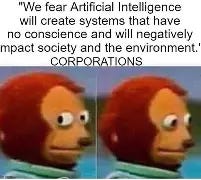
We’re living in a time when reality has become negotiable. Deepfakes can mimic anyone’s voice. AI can pump out headlines faster than a newsroom. Misinformation spreads before facts have even tied their shoelaces. And in the chaos of competing narratives, most people are left wondering what’s real, what’s propaganda, and what’s just really convincing bullshit.
But it’s not all panic and pixels. There are signs of life. Finland has baked media literacy into its school system. The International Fact-Checking Network is doing the slow, unglamorous work of keeping public discourse tethered to reality. Even AI, when it’s not being used to churn out fake celebrity scandals, has the potential to help us tell the difference between what’s true and what’s just well-lit nonsense. The tech isn’t the problem. It’s what we do with it that matters.
Ask Better Questions, Even When the Answers Suck
In Australia, we need to stay loud. Keep asking questions. Demand transparency in foreign policy. Protect our public broadcasters like they’re endangered species. And teach the next generation how to think, not just what to believe. Critical thinking shouldn’t be a niche hobby. It should be the baseline.
This was never just about left or right. It’s about who holds the power and who’s stuck living with the consequences. It’s about money talking louder than truth. While we argue about slogans and soundbites, the real decisions are happening in rooms we’re not invited into. What we see, what we hear, even what we think we know, it’s all filtered. If something feels off, it probably is. Don’t just take things at face value. Cross-check everything. Ask better questions. And always follow the money.
This isn’t the time to zone out or wait for someone else to fix it. It’s messy. It’s overwhelming. But it’s still ours to shape. The future is unwritten, and that’s the best part. Because if we’re brave enough to look past the noise, past the headlines, and past the fear, there’s still time to write something better.
References:
1. How Polarization Broke America's Democracy – Politico
2. The Growing Partisan Divide – Pew Research
3. Due Process at Risk – Democracy Now
4. California Farm Labor Shortage – NY Times
5. Iran Nuclear Accord – Arms Control Association
7. Public Support for Israel Declines – Middle East Monitor
10. FIRB Overview
11. International Fact-Checking Network – Poynter
12. Finland Media Literacy Education – The Guardian
14. The Crisis of Trust in the Digital Age – Nature